Linen Closet Organization: A Shelf Map for Sheets and Towels
A linen closet needs a place for the sheets on your beds as well as the sheets on its shelves. Start by counting complete sets, give each one a destination, then reserve its shelf space while it is in use. The same idea works for a hallway cupboard, a few wardrobe shelves, or a bedroom drawer.
Use the inventory and shelf map below to organize sheets, pillowcases and towels with storage you already own. You can copy the worksheet onto paper. The examples are hypothetical planning tools from the Natty House Team, rather than a tested household makeover or a rule about how much linen everyone should keep.
Count sets before arranging shelves
Choose one category to start: bedding for one bed, bath towels, or hand towels. Include pieces currently on beds, in drawers and in the laundry. Otherwise, a closet can look comfortably full today and have nowhere for tomorrow's clean load to go.
Write down what makes a complete set for your household. That might be one fitted sheet and two pillowcases, with a flat sheet or duvet cover included only if you use one. Check size labels when similar-looking sheets belong to different beds. Keep incomplete sets separate until you locate their missing pieces or choose another use for them.
Grouping linens by category, size and use follows IKEA's linen-closet organization guidance. Our worksheet adds a place to record the pieces away from the shelf, so your storage plan includes the whole collection.
A linen inventory you can copy
Use one row per destination and size. Count bedding in complete sets and towels as individual items. Record a location for everything you intend to keep; leave the quantity to your household's actual needs.
Destination and size: ____________________
A complete set contains: ____________________
Total owned: ____
On shelf / in use / in laundry: ____ / ____ / ____
Missing pieces or unmatched extras: ____________________
Shelf or drawer home: ____________________
Worked example: a household owns three complete queen-bed sets. One is on the bed, one is in the laundry and one is folded. The storage plan needs room for the two sets that would be off the bed when laundry is finished. If the household later stores all three, it needs another space. These numbers illustrate the count; they do not prescribe how many sets to buy.
For towels, list their destination, such as the upstairs bathroom, and count those currently in use as well. A full shelf plus a full laundry basket is a reason to review the shelf allocation before adding a new organizer.
Give the closet a shelf map
Start with items you reach for most often in a comfortable, accessible position. IKEA also recommends keeping frequently used linens easy to take out and put away. Assign shelf sections with paper labels before buying dividers or containers.
The four sections below are an example. Use the same categories across two shelves, several drawers or separate rooms if that matches your home.
- Everyday towels: separate bath towels from hand towels, with labels facing the person putting laundry away.
- Everyday bedding: one section per bed or size. Leave the home of a set visible when that set is elsewhere.
- Guest and occasional linens: keep the bedding and towels for one guest setup together, apart from everyday stock.
- One review space: use a small existing basket or a defined shelf corner for unmatched pieces. Give each item a written next action, such as checking the other laundry basket.
Seasonal blankets can have a separate home if they crowd out everyday items. Put a note on the map saying where they are. Avoid placing a second unrelated category behind the first if retrieving it means dismantling the whole shelf.
Bundle sheets so the label answers the question
Fold each piece to fit its assigned space, then keep the parts of a complete set together. An existing pillowcase can hold a small bundle; a single folded stack can work too. Choose whichever lets you remove the set without catching or spilling its neighbors.
Label the shelf by destination and size: Guest bed · queen is more useful than Blue sheets when two beds use blue bedding. Keep unmatched spare pillowcases in their own small section instead of adding them to an otherwise complete set.
Try a grab-and-return test: take out one set, then put it back as you would after laundry. If you need to lift several stacks or squeeze the bundle into place, reduce the stack height, change its fold, or assign it more space. A neat photograph is optional; a repeatable return is the useful test.
Close the loop when laundry comes back
When you put clean linens away, match the destination first and the pieces second. Return a complete set to its labelled home. If something is missing, put the incomplete bundle in the review space with a note, rather than hiding it among ready-to-use sets.
Before the next bedding change, review that space once. Locate the missing piece, deliberately make a different complete set, or assign the extra item another purpose. If the same item remains unresolved, decide where it belongs instead of repeatedly refolding it.
Use the laundry routine guide for planning loads and putting them away. For clothing, hangers and a wardrobe floor, use the separate closet cleaning guide.
Fix the part that keeps breaking
- The shelf overflows after laundry: recount the linens that were away during setup and reserve their return space.
- You pull out the wrong sheet size: change the label to bed and size, then separate the similar bundles.
- Towels topple when one is removed: use a shorter stack or split the category across two labelled sections.
- Clean linens wait in a basket: check whether their home is clear and the label is understandable to whoever puts them away.
- An organizer is already full: reassess its contents and destination before buying another one.
Keep the shelf upkeep in your room routine
Once the storage is arranged, the follow-up cleaning job can stay small: clear one shelf section and remove visible dust. Include it when you next clean the room where the linens live. Use the room-by-room checklist to place that job alongside the rest of the room.
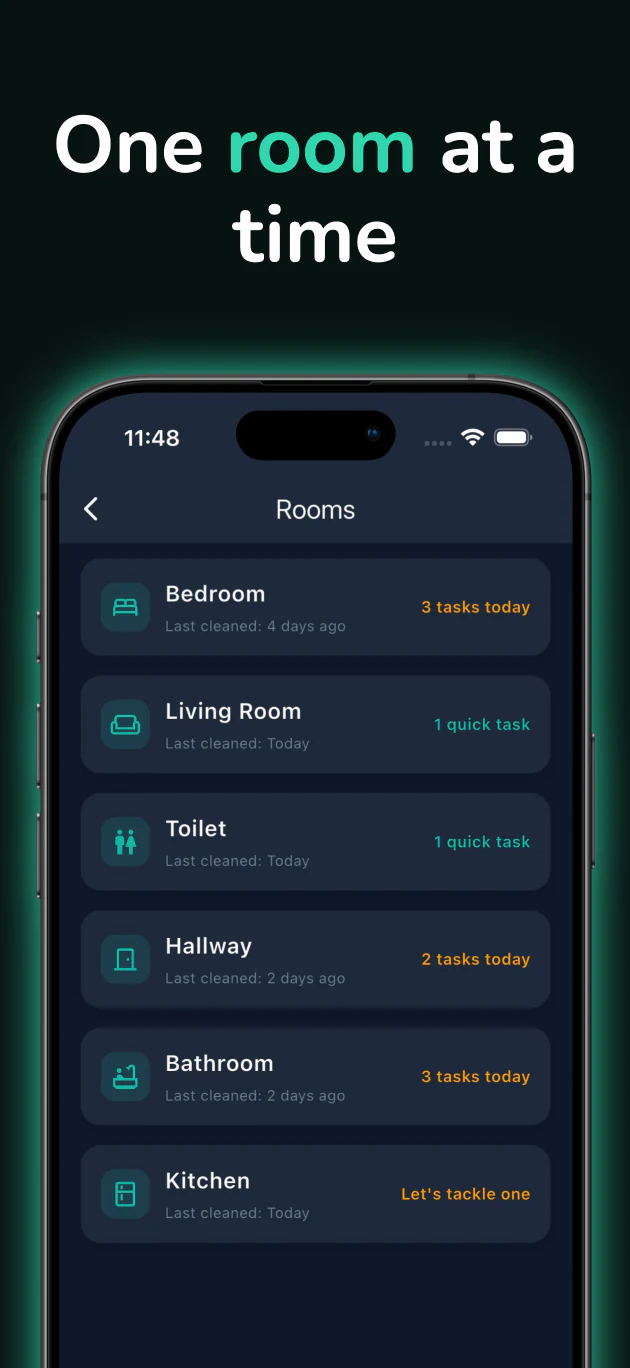
Natty House organizes cleaning tasks by room and provides cleaning-task reminders. Its room view shows room names and task counts, as in the screenshot below. Use that room context for the follow-up shelf cleaning; keep this linen inventory on paper or in your own notes.
Editorial note: the inventory, shelf map and troubleshooting examples were prepared for this guide. They offer organization choices, without setting washing frequencies or promising a particular time saving. The linked IKEA source was reviewed on October 11, 2026.