Reusable Shopping Bag Storage: Keep a Trip Set Ready
Store reusable shopping bags as a set you can pick up for your next trip. Put that set in one accessible place, keep a small reserve within a fixed space, and return the bags there after unpacking. Begin with the bags and storage you already own.
A neatly folded collection still fails if it stays in the cupboard when you leave. This guide works through both parts of the job: containing the bags at home and getting the next set to the door. The example counts are planning suggestions, not a rule for every household.
Build the set for the trip you actually make
Gather the shopping bags from cupboards, coat pockets and other storage spots. Separate out bags used for a different purpose, such as carrying library books. Then think through your most recent ordinary shopping trip. Which bags did you use? Which did you leave empty? Start the next-trip set with the ones you would choose again.
Choose the set by how you travel and what you can comfortably carry. A person walking to the store may want a compact bundle in an everyday tote; someone taking a shopping trolley may put the set in its designated pocket. Keep a reserve for a larger trip, but give it one defined section of a shelf or drawer.
If a bag needs attention before it can be used, leave it out of the ready set. Follow its own care label or manufacturer's instructions. Put a small note in the set if that bag needs replacing before the next trip; an empty space alone may be easy to overlook.
Fold to fit the place, then stop
Use a bag's own pouch or folding design when it has one. For example, the manufacturer's Standard Baggu listing says that model folds into a flat 5 × 5 inch pouch. That describes one product, so check how your own bags are designed.
For a soft tote without a pouch, lay it flat, tuck the handles inward and fold it to the width of your chosen space. Stand the folded bags side by side in an existing shallow container, or put the trip set inside one of its larger bags. Keep structured bags in their intended shape if they do not fold easily.
Try removing and replacing the set once. If you must empty the whole drawer or force it shut, reduce what is in the ready section or choose a better-fitting space. There is no need to make every fold identical. The useful finish line is a bundle you can take out and put back easily.
Give the ready set a departure cue
Choose a home that lies on your usual route out. This could be a section of the entry cupboard, a shelf beside your everyday bag, or a pocket in the trolley you take shopping. Keep the set clear of the floor and the door's opening space.
Label that section Next shopping trip. Put a short cue beside the shopping list you already use: List, keys, bag set. If you move the set into a different carry bag, move the cue too. A second storage basket will not fix a cue that you never see.
Keep other departure clutter separate from this small setup. The entryway cleaning guide covers the surrounding floor, shoes, mail and shelves.
Example: seven bags in a small apartment
Imagine a walking shopper with seven reusable bags: four medium totes, two large structured bags and one pocket-size bag. On an ordinary trip, this person chooses two medium totes. This is a hypothetical household, not a tested bag capacity or recommended total.
- Next-trip set: two folded medium totes in the everyday carry bag, ready by the entry cupboard.
- Small unexpected stop: the pocket-size bag in the carry bag's usual pocket.
- Reserve: the other two medium totes and two structured bags in one cupboard section for larger planned trips.
After the first trip, the shopper writes: “Took two medium bags; used both; wanted one more.” They choose a third medium tote for the next similar trip. After that trip, they record whether it was used. Those two observations help adjust the working set without moving all seven bags to the door.
If the first note had said “Left both bags at home,” increasing the set would answer the wrong problem. The next change would be moving the departure cue to the shopping list or putting the set into the carry bag before leaving.
Finish unpacking by resetting the set
- Empty the bags and collect any loose receipts or packaging that belongs elsewhere.
- Set aside any bag that needs care and follow its own instructions before returning it to use.
- Fold or collapse the ready bags, pairing loose pouches with their bags.
- Rebuild the next-trip set. If a bag is temporarily unavailable, choose a ready reserve bag or leave a clear note about the missing one.
- Return the set to its departure home and put the reserve back within its assigned section.
If bags collect on a chair after shopping, make the chair a cue to finish the return step rather than another storage home. If the reserve spills beyond its section, review which bags have a specific use before expanding the storage space. Keep any bags assigned to another job with that job.
Copy this departure check
□ The ready set is in the bag or trolley I am taking.
□ I have adjusted it for this particular trip.
□ Any bag still awaiting care is accounted for.
□ I know where the set will return after unpacking.
Keep the check on paper or with your usual shopping notes. You can shorten it once the return step feels familiar. When the set fails, note whether the problem was quantity, location or an unfinished reset, then change that one part.
Include the storage spot in room cleaning
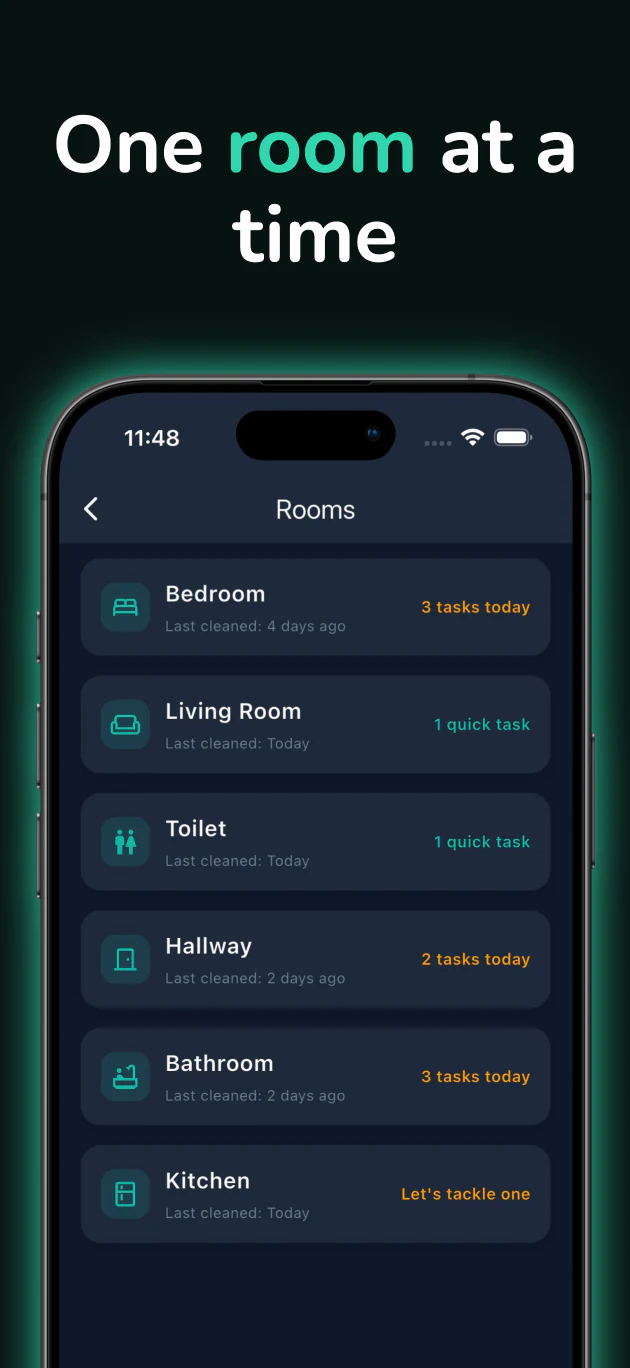
With the bags contained, the drawer or shelf can be cleared for cleaning when needed. Natty House groups cleaning tasks by room; the view below shows room names, cleaning status and task counts. Cleaning task notifications are also described in the official App Store listing.
Use that room-based workflow for cleaning the entry shelf or kitchen drawer where the bags live. Keep the trip set, bag counts and shopping departure cue in the physical setup or your own shopping notes.
Editorial note: the trip-set method, departure check and seven-bag example were prepared for this guide. The manufacturer pouch specification was checked on October 16, 2026. This article covers storage and routine planning.