How to Organize a Coat Closet: A Winter Reach Map
To organize a coat closet, empty it, keep only what your household wears this season within easy reach, and give every other item a set zone by height. Daily coats go in the center of the rod, accessories go in one container per person, and boots sit on a tray on the floor.
The plan below covers a five-pile sort, a reach map you can copy, wet gear, space for guest coats, fixes for a small closet and a hypothetical one-hour example.
Empty the closet and sort into five piles
Coat closets fill up slowly because anything that has no home ends up behind that door. Take everything out, including what sits on the floor and the top shelf, and sort it by when it gets used.
- Wearing now: coats, hats and boots someone has used in the past week or will use next week.
- Winter, not daily: snow pants, dress coats, ski layers and heavy boots that come out for certain days.
- Off season: rain shells, light jackets and summer shoes that will not be needed for months.
- Belongs elsewhere: sports gear, shopping bags, the vacuum, packages to return. Note which items truly need this closet and move the others.
- Give away: anything that no longer fits or stayed on the hanger all last winter. A donation station at home holds it until drop-off.
Pair up gloves as you go and set aside single ones in a small bag. If the mate has not appeared by the end of the season, let the single go.
Map the closet by reach
Decide where each pile lives before anything goes back in. The rule is simple: the more often something is used, the less you should have to move to reach it.
On a narrow screen, scroll the table sideways to see all three columns.
| Zone | What goes there | What holds it |
|---|---|---|
| Inside of the door | The bag, leash or umbrella you grab on the way out | Over-door hooks |
| Center of the rod | Coats worn this week, grouped by person | Sturdy matching hangers |
| Ends of the rod | Dress coats and snow gear used on certain days | Wide hangers, garment bag for a good coat |
| Front of the shelf | Hats, gloves and scarves for adults | One labeled bin or basket per person |
| Back of the shelf | Spare gloves, backup hats, off-season accessories | Lidded bin with a label facing out |
| Side wall, low | Kids' coats and backpacks | Hooks at a height a child can reach |
| Floor | Boots and shoes worn this week | Boot tray or low rack |
Off-season coats do not appear on this map on purpose. Move them to a bedroom closet, a bin under a bed or another dry spot until spring, and the rod gains room right away.
Give each person one accessories bin
A shared basket of gloves and hats turns into a dig every morning. One small container per person fixes that, and a name label lets anyone in the house put things back correctly. Keep children's bins low enough for them to reach without help, and adult bins at the front of the shelf.
Size the bin to what the person actually wears. When it overflows, something goes to the back-of-shelf bin. That limit does more to keep the closet in order than any new storage product.
Dry wet gear before it goes in
A closed closet with little airflow is a poor place to dry anything. Wet coats also dampen the coats beside them, and the whole rod starts to smell musty.
- Hang wet coats on an open hook or chair back until dry, then move them into the closet.
- Stand wet boots on a tray near the door. They go into the closet once the soles are dry.
- Lay out damp gloves and hats on a rack and let them dry fully before they return to the bin.
- Empty the boot tray when grit builds up. The entryway cleaning schedule and mudroom cleaning schedule cover the mats and floors around it.
Save room for guest coats
Winter gatherings bring more coats than a full closet can take. Count the guests at your largest gathering of the season and keep that many empty hangers together at one end of the rod. Slide your own less-used coats to another closet for the day if the rod is tight.
Clear this space well ahead of time, since a tidy closet stays tidy for weeks. The holiday cleaning schedule places this job early in its countdown. If the crowd is bigger than the closet, pick one bed for coats and tell guests where it is as they arrive.
If the closet is small
- No shelf space: hang a fabric organizer from the rod or use a pocket organizer on the door for hats and gloves.
- Rented home: over-door hooks and freestanding racks add storage without drilling.
- Crowded rod: set a limit, such as two daily coats per person, and move the rest to the ends or to a bedroom closet.
- Bulky puffers: hang them on the door hooks or at the rod ends, where they do not crush the coats next to them.
- No closet at all: a row of wall hooks, a bench with a boot tray beneath it and a basket per person follow the same map.
Example: a one-hour reset
This hypothetical household has two adults and one child sharing a reach-in closet with one rod and one shelf. They work through it on a Saturday morning.
- First 20 minutes: take everything out and make the five piles on the hallway floor.
- Next 10 minutes: wipe the shelf, vacuum the closet floor and put down the boot tray.
- Next 20 minutes: hang daily coats in the center, add three named bins, and put a low hook on the side wall for the child's coat and backpack.
- Last 10 minutes: carry rain jackets to a bedroom closet, bag the give-away pile and leave six empty hangers at the rod end.
What to skip
- Buying bins and hangers before you sort. The count of what stays tells you what you need.
- Keeping all shoes here. Only the pairs worn this week earn floor space.
- Stacking holiday bins on the shelf. Seasonal decorations need their own spot, and the guide to storing Christmas decorations covers where.
- Color-sorting coats. Grouping by person is faster to find and faster to keep up.
Keep it working through winter
A closet like this drifts a little each week, so plan a short check once a month while coats are in use. Set a five-minute timer, pull out anything that does not match the map, check that the accessories bins still close and empty the boot tray. Repeat the full sort when the season changes. The closet cleaning schedule covers dusting and moisture checks for the same space.
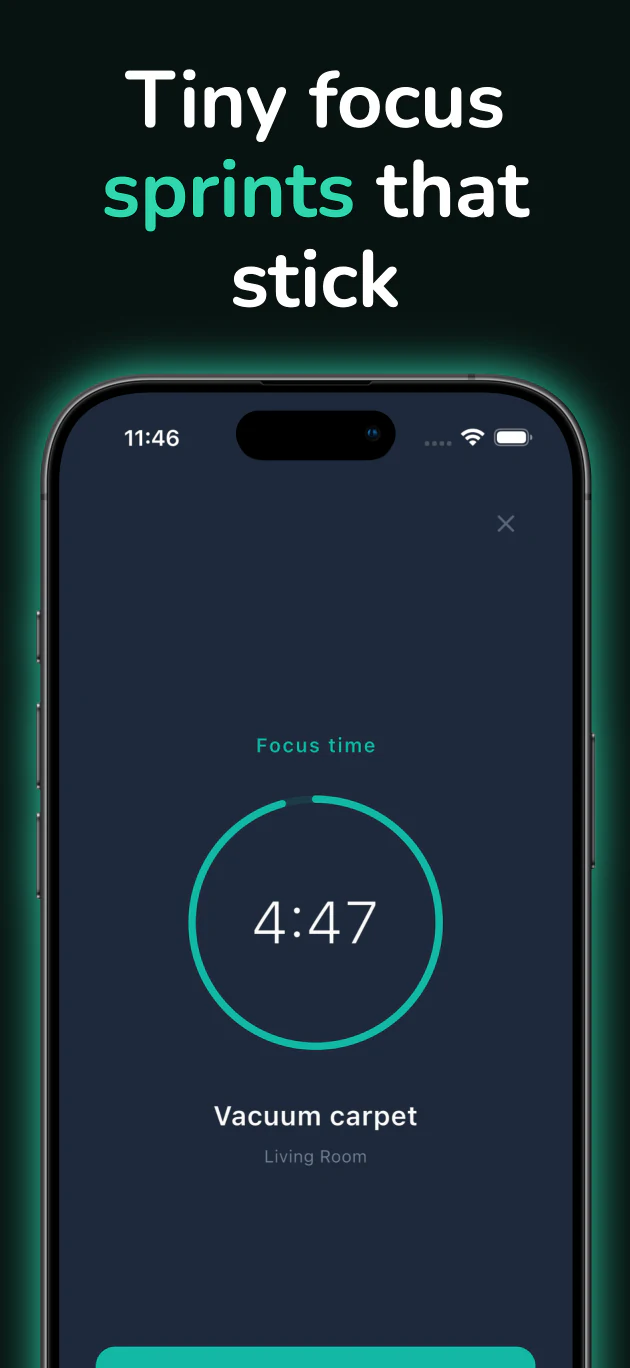
The cleaning around the closet is easier to keep up in short bursts too. Natty House runs a timed focus sprint for a selected cleaning task, as in the screenshot below, and its official App Store listing describes a daily cleaning schedule and cleaning-task notifications. Natty is a free download with in-app subscriptions.
Keep the reach map itself on paper or taped inside the closet door. Natty handles cleaning tasks by room and does not track what is stored in a closet.
Coat closet organization FAQ
What should be kept in a coat closet?
Keep the coats, boots and accessories your household wears this season, plus the bag or umbrella you grab on the way out. Move off-season coats, sports gear and anything without a reason to be near the door to another spot.
How do you organize hats and gloves in a coat closet?
Give each person one labeled bin or basket and keep it at a height that person can reach. Pair gloves as they go in, and move extras to a lidded bin at the back of the shelf when a bin overflows.
How do I make room for guest coats?
Count the guests at your largest gathering and keep that many empty hangers together at one end of the rod. If the closet cannot hold them all, choose one bed for coats and tell guests where it is when they arrive.
Editorial note: the five piles, reach map and one-hour example were prepared for this article on November 6, 2026. The example household is hypothetical.