How to Organize Cleaning Supplies: A Home Base and Room Caddies
To organize cleaning supplies, gather every product and tool in one place, keep only what you use, and split the rest into a home base for backup stock and a small caddy for each room you clean often. Label shelves by task, keep a short "running low" list near the home base, and check it once a month.
Below you will find a sorting method, a table of what goes where, a caddy packing list, setups for small homes and a hypothetical example of a two-bedroom apartment.
Gather everything before you buy a single bin
Cleaning products tend to spread through a home one bottle at a time: a spray under the kitchen sink, a second one in the bathroom, a forgotten pack of sponges in the hall closet. You cannot plan storage until you see the whole collection, so bring it all to one table or a clear patch of floor.
- Check every hiding spot: both sinks, the laundry area, the hall or utility closet, the garage shelf and any bags of spare products from past shopping trips.
- Group by job, not by brand: surface sprays, glass, bathroom, floors, dishes, laundry, cloths and sponges, brushes and scrubbers, gloves, trash bags and paper goods.
- Count duplicates: three open bottles of the same spray is a sign that nobody could find the first one.
- Set aside what you no longer use: products for surfaces you do not have, gadgets that never worked and anything past the date on its label. Dispose of leftover products as the label or your local waste rules direct.
Write down what you have a lot of and what is missing. That short list tells you how many containers you actually need, which is usually fewer than the organizing aisle suggests.
Split supplies into a home base and room caddies
Most homes do best with two layers. The home base is one shelf, cabinet or closet corner that holds refills, bulk packs and tools used everywhere, like the vacuum and mop. Room caddies are small carriers that live where you clean most: usually the kitchen and each bathroom. Daily tools stay close to the mess, and backup stock stays in one spot where you can see when it runs low.
On a narrow screen, scroll the table sideways to see all three columns.
| Spot | What lives there | What holds it |
|---|---|---|
| Home base, eye level | Opened refills and the products you restock most often | Open bins labeled by job |
| Home base, top shelf | Unopened bulk packs and seasonal products | Lidded bin with the label facing out |
| Home base, floor or wall | Vacuum, mop, bucket, broom and dustpan | Wall clips or a corner rack |
| Kitchen caddy | Surface spray, dish brush spare, cloths, a scrubber | Handled caddy under the sink |
| Bathroom caddy | Bathroom cleaner, glass spray, cloths, gloves | Caddy under the vanity or on a closet shelf |
| Laundry area | Detergent, stain remover, dryer sheets or balls | Shelf above the machine or a slim rolling cart |
| Back of a door | Spray bottles, rolls of bags, small brushes | Over-door pocket organizer |
The cabinets under each sink deserve their own check, because leaks and drips collect there. The under-sink cleaning schedule covers how often to empty and wipe those spaces.
Pack each caddy for one room
A caddy works when it holds everything needed for the usual tasks in one room and nothing else. If you have to walk back to the home base in the middle of cleaning, add that item. If something rides along for weeks without being used, take it out.
- One product per surface type: a general spray plus one specialty product the room really needs, such as glass cleaner in the bathroom.
- Cloths in a set number: pick a count, such as four, so you notice when they stop coming back from the laundry.
- One scrubbing tool: a brush or sponge sized for the room's toughest spot.
- Gloves and a spare bag: a liner for the trash can saves a trip at the end.
If you walk through the home in a set order, as in the room-by-room cleaning checklist, one shared caddy can follow you from room to room instead of a caddy per room.
Label shelves and set a restock line
Labels on the shelf edge, not just on bins, show where things go back after use. A simple restock rule keeps the home base from running empty or overflowing:
- Keep one opened product and at most one backup for each job.
- When you open the backup, add that product to a "running low" list taped inside the cabinet door or kept in your phone notes.
- Buy only what is on the list. A bulk deal on something you already have a backup for just takes shelf space.
Follow the storage directions printed on each product label, and keep products in their original containers so the directions stay with them.
Setups for small homes
- No utility closet: use the deepest cabinet you have as the home base, and store the vacuum and mop in a coat or linen closet corner. If that closet also holds sheets and towels, the linen closet shelf map helps you decide which shelf goes to what.
- One bathroom, small kitchen: skip the home base shelf and keep backups in a single lidded bin on top of a wardrobe.
- Rented home: tension rods under the sink hold spray bottles by their triggers, and over-door organizers need no drilling.
- Fewer products overall: the minimalist cleaning routine shows how a short supply list still covers a whole home.
Example: a two-bedroom apartment in one afternoon
This hypothetical household has one kitchen, one bathroom and a hall closet. They spend about 90 minutes on the reset.
- First 30 minutes: collect products from the kitchen sink, bathroom vanity, hall closet and a bag in the car trunk, then sort into job groups on the kitchen table.
- Next 15 minutes: find three opened surface sprays, leave the fullest in the kitchen caddy, mark the other two to use up first, set aside two products for a glass stovetop they no longer own and write a short list of what is missing.
- Next 30 minutes: clear the bottom of the hall closet for the vacuum and mop, put two labeled bins on the shelf above and pack one caddy each for the kitchen and bathroom.
- Last 15 minutes: tape the "running low" list inside the closet door and add the two missing items to it.
What to skip
- Decanting every product into matching bottles. It looks tidy but separates products from their label directions.
- Buying a container for each product. Sort first, then buy for the groups that are left.
- A caddy for rooms you clean once a month. Carry the shared caddy there instead.
- Storing paper towels and trash bags in bulk in every room. One backup roll per room is enough.
Keep the system working
Once a month, take five minutes to empty each caddy, wipe it, toss used-up bottles, refill from the home base and update the list. If a caddy keeps coming back half full, the room may need fewer products.
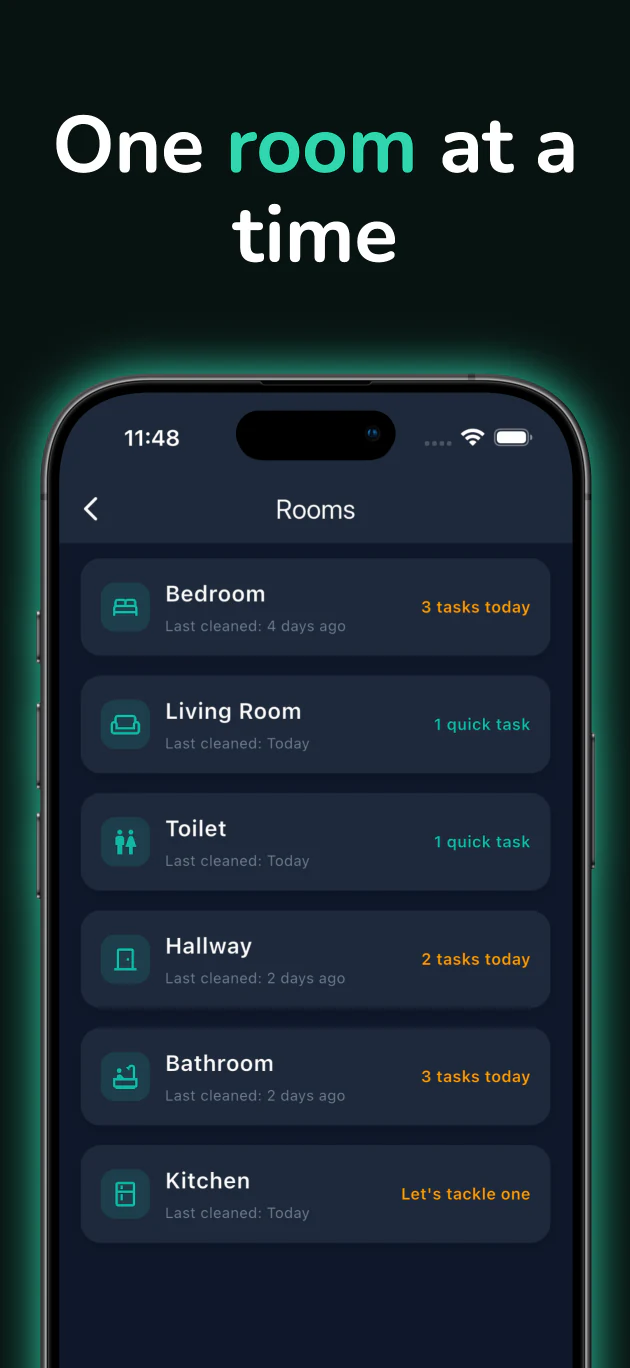
The caddies follow the rooms where you clean most, so it helps to know which rooms need attention today. Natty House lists your rooms with when each one was last cleaned and how many tasks are due today, as in the screenshot below. Its official App Store listing also describes a daily cleaning schedule and cleaning-task notifications. Natty is a free download with in-app subscriptions.
Keep the restock list itself on paper or in your notes. Natty organizes cleaning tasks by room and does not track supplies or what you have in stock.
Cleaning supplies organization FAQ
Where should cleaning supplies be stored?
Keep backup stock and large tools in one home base, such as a utility closet, a deep cabinet or a corner of a hall closet. Keep a small caddy with daily products in each room you clean often, usually the kitchen and bathroom, and follow the storage directions on each product label.
What should go in a cleaning caddy?
Pack what one room needs for its usual tasks: a general spray, one specialty product the room really uses, a set number of cloths, one scrubbing tool, gloves and a spare trash bag. Remove anything that rides along for weeks without being used.
How many backup cleaning products should I keep?
One opened product and at most one backup for each job is enough for most homes. When you open the backup, add the product to a running low list and buy only what is on that list.
Editorial note: the home base and caddy table, restock rule and 90-minute example were prepared for this article on November 9, 2026. The example household is hypothetical.