Declutter Toys Before Christmas: A Seven-Day Plan
To declutter toys before Christmas, pick a finish date about a week before gifts arrive, count how much free space the toy shelves and bins need, and work through one area a day: broken and incomplete toys first, then duplicates and outgrown toys, then a rotation box. Finish by choosing one landing spot where new gifts will go.
Below you will find a way to measure the space you need, a seven-day plan by area, five sorting piles, a short script for doing it with kids, a hypothetical example and a list of steps you can skip when December gets busy.
Start with a date and a space target
Count backward from the first gift exchange in your family, whether that is a holiday visit, a school party or Christmas morning. Aim to finish the toy sort about a week earlier, so donation bags can leave the house before the new boxes come in.
Next, set a space target. Think about roughly how many gifts the kids are likely to receive from you, relatives and friends, and look at where those toys would live. A simple rule: free one bin or one shelf section for every few gifts you expect, plus one spare. That number tells you how much needs to go, which keeps the sort from turning into a whole-house overhaul.
A seven-day toy declutter plan
Each day covers one area. Most days fit into one or two short sessions after school or after dinner. Move a day if the calendar is full; the order matters more than the dates.
On a narrow screen, scroll the table sideways to see all three columns.
| Day | Area | What to do |
|---|---|---|
| Day 1 | Whole house sweep | Gather toys from the car, sofa, bathroom and hallway into one basket and return them to their home room |
| Day 2 | Broken and incomplete toys | Pull out anything broken, puzzles with missing pieces and sets that cannot be played without lost parts |
| Day 3 | Kids' bedrooms | Empty one bin or shelf at a time; sort into the five piles below |
| Day 4 | Playroom or living room toy area | Same sort; group what stays by type so each bin has one job |
| Day 5 | Books, art supplies and paper | Recycle dried markers and used coloring pages; keep a few favorite drawings |
| Day 6 | Rotation box and donations | Pack and label the rotation box; bag donations and put them by the door or in the car |
| Day 7 | Gift landing spot | Clear the chosen shelf or bin, put the kept toys back and check you hit the space target |
Sort every bin into five piles
- Keep: toys played with in the last month or so, plus a small number of special ones the child would miss.
- Rotate: good toys nobody has reached for lately. They go into a lidded box out of sight and come back in late January, when new gifts start to feel ordinary.
- Donate or pass on: complete, clean toys the kids have outgrown or no longer choose. Check what your local charity, school or family member actually accepts before you drop anything off. A donation station keeps these bags from drifting back into the playroom.
- Recycle or trash: broken pieces, dried art supplies, packaging and freebies that never got played with.
- Decide later: one small box for toys you cannot settle on yet. Write a date on it and open it again after the holidays.
Duplicates are the easiest wins. If there are three toy cars of the same model, keep the favorite and pass on the rest.
How to do it with kids
Children usually agree more easily when the job is framed as making room rather than losing things. A few habits help:
- Do a quick first pass alone and remove obvious trash and broken items, so the kids only see real choices.
- Hand over one bin at a time. A full room of choices is tiring for anyone.
- Ask simple questions: "Did you play with this this month?" and "If it went to the rotation box, would you miss it?"
- Let them choose which pile a toy goes to within the space limit, and respect a few attachments that do not make sense to adults.
- Keep sessions short and stop while it still feels easy. You can return to the next bin tomorrow.
For more ways to share household tidying with children, see the guide to cleaning with kids.
Choose a landing spot for new gifts
New toys tend to end up on the floor because nothing was planned for them. Before the holidays, pick one cleared shelf, bin or basket in each child's room or in the play area and tell everyone that new things go there first. After a week or two, each new toy either moves into a regular bin or swaps places with something from the rotation box.
If board games are part of the gift list, the guide to organizing board games covers shelf space and loose pieces.
Example: two kids and one shared playroom
This hypothetical family has two children who share a playroom with six toy bins and a bookshelf. All six bins are overflowing, and the parents expect a handful of gifts from relatives. They start the plan on December 6 and finish on December 13:
- Space target: two empty bins for new gifts.
- Day 2: a bag of broken pieces and two incomplete puzzles go out.
- Days 3 and 4: the kids sort their bins with a parent. Extra stuffed animals and outgrown baby toys go into a donation bag; the building blocks stay, and the dress-up clothes move to the rotation box.
- Day 5: dried markers go in the trash, and the art drawer shrinks to one bin.
- Day 7: two bins are empty and labeled "new". The rotation box goes on a closet shelf with "open in late January" written on the lid.
What to skip
- Buying new storage before the sort. Count what remains first.
- Sorting while the kids are tired or hungry. A short session at a calm time works better than a long one at bedtime.
- Deciding everything in one go. The decide-later box exists so the plan keeps moving.
- Washing every toy before you know which ones stay. Clean only what you donate and what goes back on the shelf.
Keep the playroom reset short after the holidays
Once the new toys have a place, a daily pickup keeps the room usable. The playroom cleaning schedule has a short evening reset, and the post-holiday cleaning checklist covers the rest of the house in late December.
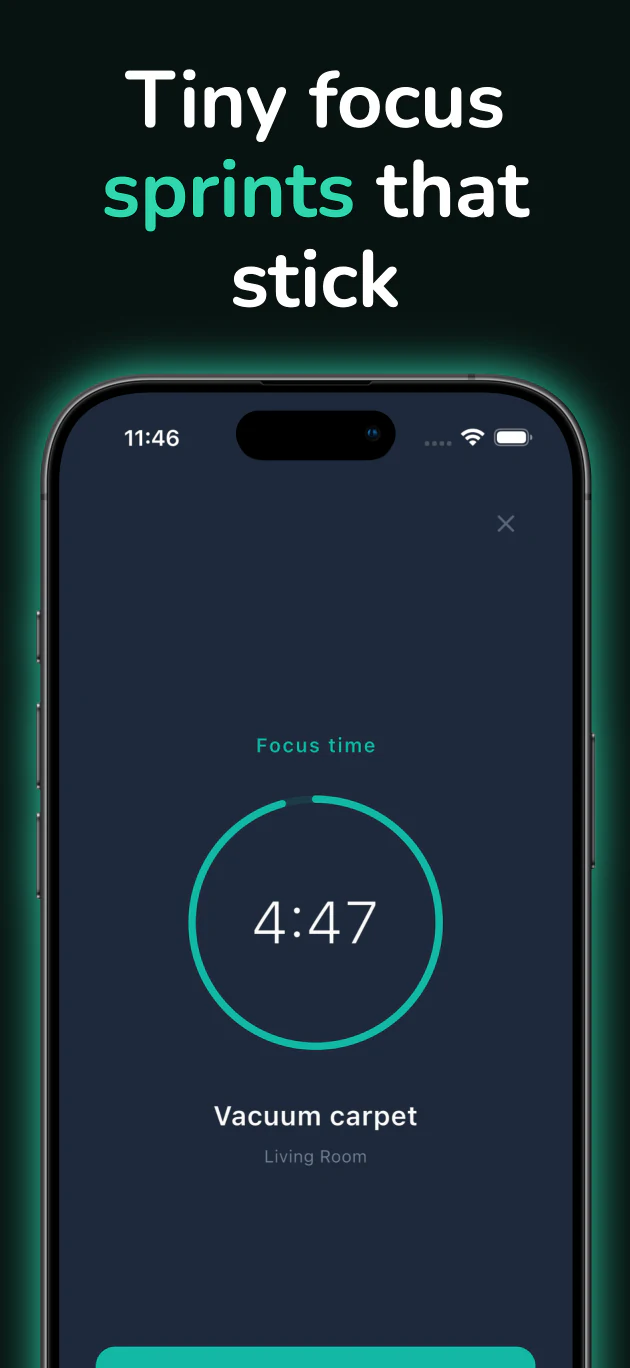
Short, timed sessions suit a toy sort because you stop before anyone gets worn out. Natty House has a focus timer for one selected cleaning task; the screenshot below shows it running for a living room task. Its official App Store listing also describes a daily cleaning schedule and cleaning-task notifications. Natty is a free download with in-app subscriptions.
Natty does not keep a list of your toys or import this plan, so write the seven days on paper or in your own notes.
Toy decluttering FAQ
When should you declutter toys before Christmas?
Aim to finish about a week before the first gift exchange in your family. That leaves time to drop off donation bags and clear a landing spot before new toys arrive. A late November or early December start gives most families enough room.
How many toys should you get rid of before Christmas?
Work from space rather than a fixed number. Estimate how many gifts are coming, free one bin or shelf section for every few of them plus one spare, and stop once that space is clear.
Should kids help declutter their toys?
Usually yes, with limits. Remove trash and broken items yourself first, then let the kids sort one bin at a time and choose which pile each toy goes to. Short sessions and a rotation box make the choices feel less final.
Editorial note: the space target, the seven-day plan, the five sorting piles and the playroom example were prepared for this article on November 23, 2026. The example family is hypothetical.