January Declutter Challenge: A 31-Day Calendar
A January declutter challenge works best as one 15-minute session a day, moving from the easiest spots in the first week to closets and paper later in the month. Every seventh day is a catch-up and drop-off day, so missed sessions do not pile up and the bags of outgoing things leave the house each week instead of waiting in the hallway until February.
Below is a 31-day calendar you can copy, three rules for deciding quickly, a hypothetical week that went off track, and a short list of what to leave out of the challenge.
Set up before January 1
A few minutes of setup in late December saves the first week from stalling:
- Three containers: one bag for donations, one for trash and recycling, and one basket for things that belong in another room. The basket gets emptied at the end of every session.
- A fixed time: pick a time you already have most days, such as after dinner or before the morning shower. Fifteen minutes is short enough that you can still do it on a busy day.
- A drop-off plan: decide where donations go and on which day they leave. The donation station checklist shows how to label bags for different recipients.
- A finished holiday takedown: if decorations are still up, pack them first. The Christmas decoration storage guide covers that job; this calendar assumes the boxes are already away.
Three rules that keep each session short
- One small area per day. A single drawer, one shelf or one bag is enough. Stop when the timer ends, even mid-shelf, and note where you stopped.
- Decide on the first touch. Keep it, move it to the basket, or put it in a bag. If you hesitate for longer than a few seconds, put the item in a "maybe" box with the date written on it and move on.
- Finish by putting things away. The last two or three minutes go to emptying the basket into the right rooms and tying the bags. A session that ends with a pile on the floor has not ended.
The 31-day January declutter calendar
The month starts with quick wins that need few decisions and moves toward areas with more choices, like clothes and paper. Days 7, 14, 21 and 28 are catch-up and drop-off days.
On a narrow screen, scroll the table sideways to see all three columns.
| Days | Area | Daily tasks |
|---|---|---|
| 1–3 | Quick wins | Fridge shelves and leftovers; kitchen counters; the spot by the door where mail and keys land |
| 4–6 | Small containers | One junk drawer; your bag or backpack; the car glove box and door pockets |
| 7 | Catch-up | Finish any missed day, then take the first donation bag out of the house |
| 8–10 | Kitchen | Food storage containers and lids; mugs and water bottles; one cabinet of gadgets you rarely use |
| 11–13 | Bathroom and linens | Products you stopped using; worn towels and washcloths; spare sheets with missing pieces |
| 14 | Catch-up | Missed days, the "maybe" box check and the second drop-off |
| 15–17 | Bedroom | Nightstand drawer; socks and underwear; the space under the bed |
| 18–20 | Closets | Shoes; one rail of clothes; coats, hats and gloves in the entry closet |
| 21 | Catch-up | Missed days and the third drop-off |
| 22–24 | Living areas | Books and magazines; cables and old chargers; games, toys or hobby supplies |
| 25–27 | Paper | Old manuals and warranties; last year's cards and calendars; one pile of loose papers |
| 28 | Catch-up | Missed days and the fourth drop-off |
| 29–30 | Your choice | The two areas that bothered you most during the month |
| 31 | Wrap-up | Open the "maybe" box, decide on everything in it and take the last bag out |
Swap any row that does not fit your home. If you have no car, use day 6 for a coat pocket sweep; if there is no bed with storage space, use day 17 for a laundry basket. The junk drawer guide and the under-bed storage guide go deeper on days 4 and 17 if one session is not enough.
Example: a week that went off track
This hypothetical household of two starts on January 1 and does fine for three days. Then a work trip takes away days 4, 5 and 6.
- Day 7 (catch-up): they skip the glove box for now and use the 15 minutes on the junk drawer, the task with the most daily annoyance. The bag only needs a five-minute sort, so they do it the same evening.
- Same day: the first donation bag goes in the car and is dropped off on the next errand.
- Day 8: they return to the calendar as written instead of trying to make up every missed day.
- Day 14: the glove box gets its turn on the second catch-up day.
The point of the catch-up day is that the calendar never shows a backlog of more than six days. If you fall further behind, drop the oldest missed task and keep going.
What to leave out of the challenge
- Sentimental boxes. Photos, letters and family items take longer than 15 minutes and are hard to decide on quickly. Give them their own afternoon later in the year.
- Other people's things. Ask before you sort a partner's or roommate's shelf. Clear shared areas such as the kitchen and the entry together.
- Buying containers. Wait until the month ends. You will need fewer than you think once the extra things are gone.
- Deep cleaning in the same session. Wiping an empty shelf is fine. Scrubbing the whole cabinet turns a 15-minute task into an hour.
After January: keep the cleared spots clean
Clearing a shelf once is the hard part; what keeps it clear is a short regular cleaning routine for the spaces you emptied. The guide to decluttering before cleaning explains how fewer items make that routine shorter, and the one-in-one-out rule there helps stop the next pile from forming.
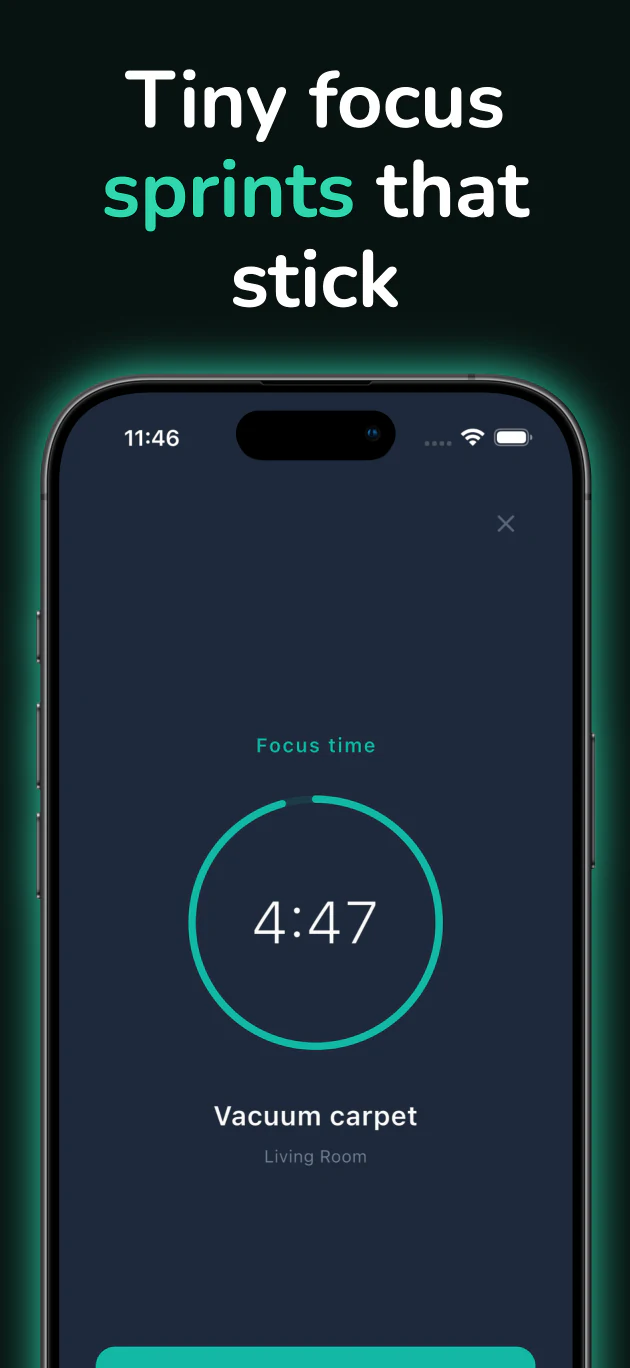
If short daily sessions suit you, Natty House uses the same idea for cleaning. Its focus timer runs a timed sprint for a selected cleaning task in a room, as in the screenshot below. Natty is for cleaning tasks, so keep the declutter calendar itself on paper or in your own notes. The official App Store listing also describes a daily cleaning schedule and task notifications. Natty is a free download with in-app subscriptions.
January declutter challenge FAQ
How long should each day of a declutter challenge take?
About 15 minutes is enough for one drawer, shelf or small area, and it is short enough to fit on a busy day. Leave the last two or three minutes for putting things in the right rooms and tying the bags.
What should I declutter first in January?
Start with areas that need few decisions, such as the fridge, kitchen counters and the spot by the door where mail lands. Clothes, paper and sentimental items take more thought, so they come later in the month or get their own time.
What if I miss a few days of the challenge?
Use the next catch-up day for the missed task that bothers you most, then return to the calendar as written. If you fall more than a week behind, drop the oldest missed task instead of trying to make up every day.
Editorial note: the 31-day calendar, the three session rules and the example week were prepared for this article on November 16, 2026. The example household is hypothetical.